

- English
 Esperanto
 Afrikaans
 Català
 שפה עברית
 Cymraeg
 Galego
 Latviešu
 icelandic
 ייִדיש
 беларускі
 Hrvatski
 Kreyòl ayisyen
 Shqiptar
 Malti
Malti lugha ya Kiswahili
 አማርኛ
አማርኛ Bosanski
 Frysk
Frysk ភាសាខ្មែរ
 ქართული
 ગુજરાતી
 Hausa
Hausa Кыргыз тили
 ಕನ್ನಡ
ಕನ್ನಡ Corsa
Corsa Kurdî
Kurdî മലയാളം
 Maori
Maori Монгол хэл
 Hmong
Hmong IsiXhosa
 Zulu
Zulu Yoruba
 অসমীয়া
 ଓଡିଆ
ଓଡିଆ Punjabi
 پښتو
پښتو Chichewa
 Samoa
Samoa Sesotho
 සිංහල
සිංහල Gàidhlig
 Cebuano
 Somali
 Тоҷикӣ
 O'zbek
 Hawaiian
 سنڌي
سنڌي Shinra
 Հայերեն
 Igbo
Igbo Sundanese
 Lëtzebuergesch
 Malagasy
 Español
 Português
 русский
 Français
 日本語
日本語 Deutsch
 tiếng Việt
 Italiano
 Nederlands
 ภาษาไทย
 Polski
 한국어
한국어 Svenska
 magyar
 Malay
Malay বাংলা ভাষার
 Dansk
Dansk Suomi
Suomi हिन्दी
 Pilipino
 Türkçe
 Gaeilge
 العربية
 Indonesia
 Norsk
Norsk تمل
تمل český
český ελληνικά
 український
 Javanese
 فارسی
فارسی தமிழ்
தமிழ் తెలుగు
 नेपाली
 Burmese
 български
 ລາວ
ລາວ Latine
 Қазақша
 Euskal
 Azərbaycan
 Slovenský jazyk
 Македонски
 Lietuvos
 Eesti Keel
 Română
 Slovenski
 मराठी
मराठी Srpski језик

How Oil Type Mold Temperature Machine for Plastic Improves Precision Manufacturing?
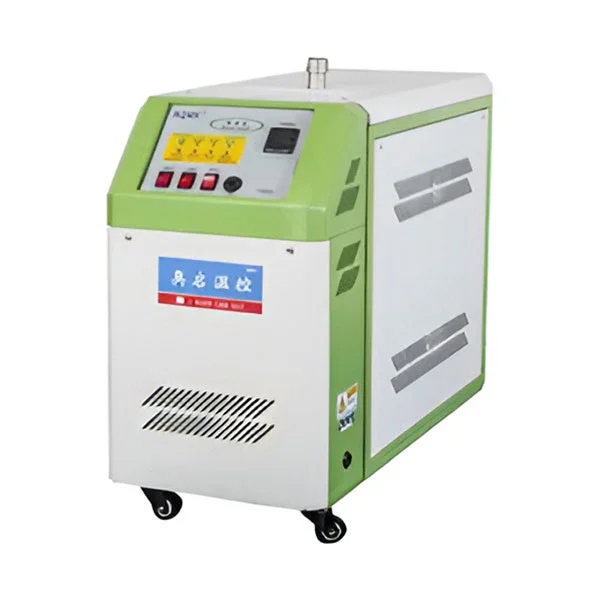
Plastic processing industries increasingly rely on temperature stability to ensure product consistency, surface finish, and dimensional accuracy. The Oil Type Mold Temperature Machine for Plastic plays a crucial role in maintaining controlled heat transfer during injection molding, extrusion, and other thermal forming operations. This article explores working principles, application advantages, technical comparisons, practical selection guidance, maintenance tips, and real-world operational insights to help manufacturers overcome production challenges such as warping, cycle delays, or uneven shrinkage. Special attention is given to solutions offered by Ningbo Ao Kai Precision Temperature Control Technology Co., Ltd., whose engineering innovations support reliable and efficient process environments.
Contents
- 1. Introduction to Oil Type Mold Temperature Machine for Plastic
- 2. Common Manufacturing Challenges Solved by Thermal Control
- 3. Working Principle and Core Components
- 4. Comparison Between Oil-Based and Water-Based Systems
- 5. Key Technical Parameters and Performance Indicators
- 6. Applications Across Plastic Production Fields
- 7. Selecting the Right Equipment for Your Facility
- 8. Operational Best Practices and Maintenance
- 9. Future Industry Trends
- 10. FAQ
1. Introduction to Oil Type Mold Temperature Machine for Plastic
The Oil Type Mold Temperature Machine for Plastic is engineered to regulate mold temperature through circulating thermal oil at precisely controlled levels. Unlike conventional temperature solutions, oil-based circulation enables higher heating ranges and stable thermal uniformity without high-pressure conditions. Manufacturers working with advanced polymers require dependable thermal management, and companies such as Ningbo Ao Kai Precision Temperature Control Technology Co., Ltd. provide specialized systems designed for continuous industrial performance.
Temperature control affects nearly every aspect of molded plastic quality. Stable heat ensures optimal flow characteristics, reduces stress marks, and minimizes scrap rates. By integrating precision controllers and efficient heat exchangers, oil-based units offer improved reliability across complex molding environments.
2. Common Manufacturing Challenges Solved by Thermal Control
Many production lines encounter issues tied to inconsistent mold temperature. Without proper management, plastic materials may cool unevenly or fail to fill mold cavities completely. Implementing an Oil Type Mold Temperature Machine for Plastic addresses these critical concerns.
- Surface imperfections caused by uneven cooling
- Cycle time inefficiencies due to slow heat recovery
- Warping or dimensional distortion
- Excessive reject rates increasing cost
- Energy waste from unstable temperature regulation
Industrial suppliers like Ningbo Ao Kai Precision Temperature Control Technology Co., Ltd. design systems capable of maintaining continuous thermal equilibrium, helping operators meet production targets while reducing material loss.
3. Working Principle and Core Components
An Oil Type Mold Temperature Machine for Plastic operates by heating thermal oil within a sealed circuit and circulating it through molds or processing equipment. Sensors monitor temperature conditions while controllers adjust heating output accordingly. The main functional elements include heaters, circulation pumps, expansion tanks, control panels, and safety protection systems.
| Component | Function |
|---|---|
| Heating Element | Raises thermal oil temperature to target range |
| Circulation Pump | Ensures consistent oil flow through mold channels |
| Controller Unit | Maintains precise temperature settings |
| Safety System | Prevents overheating or pressure anomalies |
| Expansion Tank | Balances volume changes in heated oil |
Advanced engineering integration from Ningbo Ao Kai Precision Temperature Control Technology Co., Ltd. emphasizes durability and monitoring precision, ensuring reliable heat transfer even under demanding operational cycles.
4. Comparison Between Oil-Based and Water-Based Systems
Choosing between oil and water temperature control depends on application needs. Oil-based units generally offer wider operating ranges and stability under high heat.
| Criteria | Oil Type System | Water Type System |
|---|---|---|
| Maximum Temperature | Higher range | Moderate range |
| Pressure Requirement | Lower pressure | Higher pressure at high heat |
| Thermal Stability | Excellent | Good |
| Maintenance Frequency | Moderate | Lower |
| Application Suitability | Engineering plastics | General molding |
Industrial operators frequently rely on oil systems when processing advanced materials where stability outweighs simplicity.
5. Key Technical Parameters and Performance Indicators
Evaluating equipment specifications ensures compatibility with production goals. Manufacturers should consider heating capacity, flow rate, control accuracy, and structural durability.
- Temperature range capability
- Control precision and response time
- Pump reliability
- Energy efficiency ratings
- Safety certification features
Systems produced by Ningbo Ao Kai Precision Temperature Control Technology Co., Ltd. emphasize performance balance across these indicators to accommodate demanding plastic processing lines.
6. Applications Across Plastic Production Fields
Oil Type Mold Temperature Machine for Plastic solutions are widely used across diverse manufacturing segments including automotive components, consumer electronics housings, medical device enclosures, and packaging containers.
- Injection molding processes
- Extrusion operations
- Rubber forming
- Composite material shaping
- Precision industrial parts production
In each application, stable thermal management ensures reproducible outcomes and consistent product quality.
7. Selecting the Right Equipment for Your Facility
Selection involves evaluating mold structure, cycle demand, facility space, and energy considerations. Decision-makers should compare system capacity with production throughput expectations.
Consulting experienced manufacturers such as Ningbo Ao Kai Precision Temperature Control Technology Co., Ltd. can provide tailored recommendations aligned with operational scale and material requirements.
Consider these steps:
- Assess thermal load requirements
- Match capacity to cycle intensity
- Evaluate control interface usability
- Confirm safety and compliance features
- Review after-sales support capability
8. Operational Best Practices and Maintenance
Routine maintenance extends equipment lifespan and prevents unexpected downtime. Operators should monitor oil condition, check pump performance, and calibrate sensors periodically.
- Inspect oil cleanliness
- Monitor circulation stability
- Clean internal channels
- Update control software if available
- Schedule professional servicing
Maintaining disciplined procedures ensures continuous efficiency throughout production cycles.
9. Future Industry Trends
Automation and smart monitoring technologies continue transforming temperature control solutions. Integration with digital platforms enhances diagnostics and predictive maintenance capability. Leading manufacturers, including Ningbo Ao Kai Precision Temperature Control Technology Co., Ltd., are exploring advanced sensor networks and adaptive control systems designed to optimize industrial heat management environments.
10. FAQ
Q: Why choose oil-based mold temperature control?
A: Oil circulation enables higher temperature capability and stable heat distribution for advanced plastic processing.
Q: How often should maintenance be performed?
A: Inspection schedules depend on usage intensity, but regular monitoring ensures reliability and long-term operation.
Q: Can this equipment improve product surface quality?
A: Yes, stable thermal control reduces defects such as flow marks and shrinkage variations.
Q: Is customization available?
A: Many suppliers including Ningbo Ao Kai Precision Temperature Control Technology Co., Ltd. provide adaptable configurations suited to industrial requirements.
Q: What industries benefit most?
A: Automotive, electronics, packaging, and precision component sectors rely heavily on consistent mold temperature management.
Ready to Enhance Your Production Performance? Choosing the right Oil Type Mold Temperature Machine for Plastic can transform operational efficiency and product consistency. Partner with Ningbo Ao Kai Precision Temperature Control Technology Co., Ltd. to explore advanced temperature control solutions tailored to your manufacturing needs. Contact us today to discuss how our expertise can support your next project.
Send Inquiry
-
E-mail
X
We use cookies to offer you a better browsing experience, analyze site traffic and personalize content. By using this site, you agree to our use of cookies.
Privacy Policy