

- English
 Esperanto
 Afrikaans
 Català
 שפה עברית
 Cymraeg
 Galego
 Latviešu
 icelandic
 ייִדיש
 беларускі
 Hrvatski
 Kreyòl ayisyen
 Shqiptar
 Malti
Malti lugha ya Kiswahili
 አማርኛ
አማርኛ Bosanski
 Frysk
Frysk ភាសាខ្មែរ
 ქართული
 ગુજરાતી
 Hausa
Hausa Кыргыз тили
 ಕನ್ನಡ
ಕನ್ನಡ Corsa
Corsa Kurdî
Kurdî മലയാളം
 Maori
Maori Монгол хэл
 Hmong
Hmong IsiXhosa
 Zulu
Zulu Yoruba
 অসমীয়া
 ଓଡିଆ
ଓଡିଆ Punjabi
 پښتو
پښتو Chichewa
 Samoa
Samoa Sesotho
 සිංහල
සිංහල Gàidhlig
 Cebuano
 Somali
 Тоҷикӣ
 O'zbek
 Hawaiian
 سنڌي
سنڌي Shinra
 Հայերեն
 Igbo
Igbo Sundanese
 Lëtzebuergesch
 Malagasy
 Español
 Português
 русский
 Français
 日本語
日本語 Deutsch
 tiếng Việt
 Italiano
 Nederlands
 ภาษาไทย
 Polski
 한국어
한국어 Svenska
 magyar
 Malay
Malay বাংলা ভাষার
 Dansk
Dansk Suomi
Suomi हिन्दी
 Pilipino
 Türkçe
 Gaeilge
 العربية
 Indonesia
 Norsk
Norsk تمل
تمل český
český ελληνικά
 український
 Javanese
 فارسی
فارسی தமிழ்
தமிழ் తెలుగు
 नेपाली
 Burmese
 български
 ລາວ
ລາວ Latine
 Қазақша
 Euskal
 Azərbaycan
 Slovenský jazyk
 Македонски
 Lietuvos
 Eesti Keel
 Română
 Slovenski
 मराठी
मराठी Srpski језик

What Is a Mold Temperature Machine and Why Does It Matter?
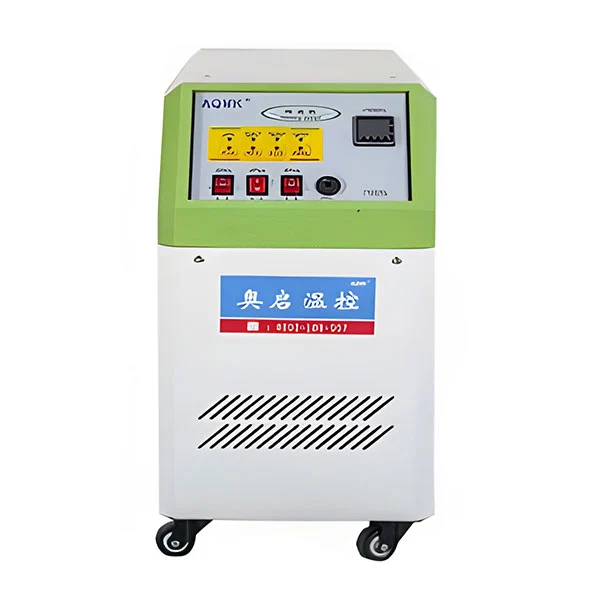
The Mold Temperature Machine, also known as a mold temperature controller (MTC), is an essential industrial system used to regulate and maintain the precise temperature of molds during processes like injection molding, die‑casting, and rubber molding. Accurate control of mold temperature significantly affects product quality, cycle times, and operational efficiency. Manufacturers such as Ningbo Ao Kai Precision Temperature Control Technology Co., Ltd rely on reliable mold temperature machines for consistent, high‑quality output in modern manufacturing.
Abstract
This blog provides a comprehensive exploration of the mold temperature machine: what it is, how it works, why it’s critical in manufacturing, and how it compares with related tools. We dive into keyword‑based questions such as types of mold temperature machines, advantages and disadvantages, practical applications, and selection criteria. The article also includes helpful tables, a clear FAQ section, and source references to support your understanding and decision‑making.
Table of Contents
What Is a Mold Temperature Machine?
A mold temperature machine, or mold temperature controller, is industrial equipment that precisely regulates the temperature of a mold during a manufacturing cycle. It uses sensors and advanced controls to maintain a steady temperature, which directly impacts the consistency and quality of molded parts.
How Does a Mold Temperature Machine Work?
Mold temperature machines work by circulating a heat transfer medium—such as water or thermal oil—through channels in a mold. Integrated sensors continuously monitor temperature and communicate with a control unit that activates heating or cooling systems as needed to maintain the set temperature range.
What Types of Mold Temperature Machines Exist?
| Type | Main Features | Typical Use Case |
|---|---|---|
| Water Mold Temperature Machine | Fast heat transfer, environmentally friendly | Plastics and general molding |
| Oil Mold Temperature Machine | High thermal range and stability | High temperature molding, die casting |
| Dual‑zone Controllers | Multiple zones with different temperatures | Complex mold setups |
| Portable Units | Compact and mobile | Versatile production lines |
Different types accommodate varied temperature ranges and industrial needs.
What Are the Main Benefits of Using Mold Temperature Machines?
- Improved Product Quality: Stable temperatures reduce defects like warping and shrinkage.
- Increased Efficiency: Optimized heating and cooling shorten cycle times.
- Energy Savings: Precise control minimizes waste and lowers costs.
- Extended Mold Life: Consistent temperatures reduce thermal stress.
- Enhanced Surface Finish: Uniform cooling improves appearance.
What Are the Limitations of Mold Temperature Machines?
- Initial Cost: High‑precision systems require substantial upfront investment.
- Maintenance Needs: Especially for high‑temperature and multi‑zone units.
- Skill Requirement: Operators must understand thermal control and maintenance.
- Fluid Management: Oil types can involve complex handling relative to water types.
How Do Water and Oil Mold Temperature Machines Compare?
| Feature | Water MTC | Oil MTC |
|---|---|---|
| Temperature Range | Up to ~120°C | Up to ~350°C |
| Heat Speed | Faster | Slower but stable |
| Maintenance | Requires scale management | Moderate |
| Cost | Lower | Higher |
Water solutions are ideal for general molding, while oil systems serve high‑temperature applications.
Where and How Are Mold Temperature Machines Used?
Mold temperature machines are widely used in:
- Plastic injection molding lines.
- Rubber molding, composites and die‑casting.
- Automotive, electronics, medical devices industries.
FAQ
Q: What is the primary purpose of a mold temperature machine?
A: The primary purpose is to maintain a consistent, precise mold temperature during production cycles to improve product quality, reduce cycle times, and enhance efficiency by using sensor‑based control systems.
Q: How does a mold temperature machine affect product quality?
A: By ensuring uniform heating and cooling, it minimizes defects like shrinkage, warping, and inconsistent dimensions, resulting in higher quality molded parts.
Q: Which industries benefit most from mold temperature machines?
A: Industries including plastic manufacturing, automotive, electronics, and medical device production benefit from stable thermal control during molding processes.
Q: What are the main differences between water and oil mold temperature machines?
A: Water machines deliver faster heat transfer at lower temperature ranges, while oil machines serve higher temperature applications and provide stable thermal environments for demanding processes.
Q: Why choose a high‑precision mold temperature controller from Ningbo Ao Kai Precision Temperature Control Technology Co., Ltd?
A: Choosing high‑precision controllers ensures tighter temperature accuracy, improved product consistency, and long‑term energy efficiency that align with modern manufacturing demands.
Send Inquiry
-
E-mail
X
We use cookies to offer you a better browsing experience, analyze site traffic and personalize content. By using this site, you agree to our use of cookies.
Privacy Policy